
 - EN
- EN  - EN
- EN
The world’s best products aren’t built because companies have the most engineers. They’re built because they make better technical decisions—earlier—while navigating uncertainty with discipline.
Large technology companies invest heavily in CTOs, product strategy, technical architecture, competitive intelligence, technology research, and innovation teams. Those capabilities help them solve technical problems faster, recognize emerging technologies sooner, avoid expensive design mistakes, and build products customers actually want.
Most startups and small businesses can’t afford that depth. That gap shows up as slower releases, repeated rework, and missed market timing.
Now the economics are changing.
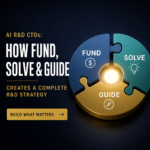
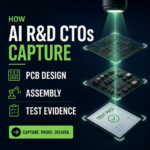
A modern AI R&D CTO brings enterprise-grade technical leadership and AI Product Intelligence to smaller organizations, without the traditional overhead. And importantly, as your team designs, tests, and iterates, the AI R&D CTO can also help continuously capture the technical and financial evidence needed for R&D Tax Credits.
The result: stronger products and a cleaner, faster path to Research and Development Tax Credits that improve Business Cash Flow.
SHAIN’s positioning is simple: the AI R&D CTO democratizes innovation by helping startups, micro businesses, and small companies recover R&D Tax Credits while gaining access to technical leadership and innovation intelligence previously available only to large enterprises.
AI Product Strategy that turns uncertainty into a roadmap:
World-class execution starts with clarity: what to build, what not to build, and what must be proven before scaling. An AI Chief Technology Officer supports leadership by strengthening Product Strategy around technical feasibility, risk, and sequencing.
In practice, this means mapping product goals to the real technical uncertainties—performance constraints, reliability targets, security requirements, integration challenges, data quality limitations, or manufacturing tolerances. Those uncertainties matter not just for product outcomes, but also for R&D Tax Credit eligibility.
Under the IRS “four-part test,” many product development efforts qualify when they:
– Aim to improve functionality, performance, reliability, quality, or usability
– Involve technical uncertainty
– Use a process of experimentation
-Rely on engineering, computer science, or other hard sciences
When the AI R&D CTO helps frame product work around testable hypotheses and measurable outcomes, it naturally increases the volume and quality of Qualified Research Activities (QRAs) while creating cleaner evidence for an R&D Study.
Identify Qualified Research Activities (QRAs) across real-world sectors:
Many companies perform qualifying work without labeling it “R&D.” The AI R&D CTO helps teams recognize QRAs embedded in everyday execution—especially in software, manufacturing, engineering, and technology services.
Examples of Qualified Research Activities the AI Technical Advisor may help surface and document include:
– Software: building new algorithms, improving throughput/latency, refactoring architecture to meet scale, hardening security, optimizing cloud cost/performance tradeoffs, and resolving data pipeline constraints
– Manufacturing: developing new processes, improving yields, reducing defect rates, validating new materials, building tooling, and running pilot production trials
– Engineering: prototyping, simulation, tolerance studies, reliability testing, and iterative redesign to resolve technical uncertainty
– Technology businesses: integration of new protocols, building novel automation, performance benchmarking, and experimentation with new stacks
The AI R&D CTO closes that gap through structured identification and consistent capture of technical narratives tied to advancement.

“Artificial Intelligence, deep learning, machine learning — whatever you’re doing if you don’t understand it — learn it. Because otherwise you’re going to be a dinosaur within 3 years.” Mark Cuban
– American billionaire businessman
Calculate Qualified Research Expenses (QREs) to unlock Tax Savings and cash flow:
Once QRAs are identified, the next step is quantifying Qualified Research Expenses (QREs). This is where many claims fall short: costs are real, but the mapping is messy.
An AI R&D CTO, working alongside R&D Tax Credit Services and your CPA, helps organize QREs in a defensible way, typically including:
– W-2 wages for employees directly performing, supervising, or supporting qualified research
– Certain contractor costs related to qualified research
– Supplies consumed during experimentation and testing (common in manufacturing and hardware)
The goal isn’t just claiming “a credit.” It’s building a repeatable system that produces predictable Tax Savings and improves Business Cash Flow year after year. For eligible startups, this can also translate into an R&D Tax Credit Refund via payroll tax offset rules—turning innovation work into near-term funding.
Replace manual R&D Study work with AI-powered R&D Tax Credit Intelligence
Traditional R&D Tax Credit Consultants often rely on manual interviews, spreadsheets, and narrative drafting—time-consuming for teams and expensive to maintain annually.
The AI R&D CTO modernizes this with R&D Tax Credit Intelligence focused on speed, precision, and documentation quality.
Using sector-specific trained LLM workflows designed for R&D Tax Credit eligibility, the AI R&D CTO helps:
– Identify activities likely to meet the four-part test
– Capture technical uncertainties faced and the experiments performed
– Describe technological advancements and the “why it wasn’t readily available” rationale
– Generate contemporaneous technical documentation suitable for an R&D Study
– Support technical interviews and produce structured time surveys
– Organize evidence for IRS compliance expectations
– Support Form 6765 preparation with CPA-ready summaries
This approach reduces the burden on engineers and founders while improving claim defensibility. Instead of reconstructing a year of work after the fact, documentation becomes continuous—making the R&D Study more accurate and less disruptive.
AI Innovation Platform thinking: turn the credit into a self-funding innovation engine:
The most strategic shift is using the R&D Tax Credit as ongoing innovation funding.
When your AI R&D CTO continuously captures QRAs and QREs while guiding Product Development decisions, the credit becomes a financial output of building better products. That is the foundation of modern Innovation Management and AI Innovation Management:
– Build with experimentation discipline
– Document as you go
– Recover a portion of innovation cost via R&D Tax Credits
– Reinvest into the next set of technical barriers
For smaller companies, this can be the difference between delaying a roadmap and shipping on time. It also creates a more level playing field: enterprise-like technical leadership and innovation incentives—without enterprise headcount.
R&D Tax Credit compliance support without slowing down product teams:
IRS compliance is about consistency, and supportable methodology. The AI R&D CTO helps ensure your claim is organized and evidence-driven.
That includes practical support for:
– Clean technical narratives aligned to Qualified Research Activities
– Consistent treatment of Qualified Research Expenses
– Documented experimentation (alternatives evaluated, tests run, results observed)
-Year-over-year repeatability so the R&D Tax Credit process doesn’t restart from zero
The outcome is fewer fire drills at year-end, less disruption to engineering, and clearer collaboration between technical leadership and tax stakeholders.
Get world-class technical leadership and seamlessly capture R&D Tax Credits:
For decades, world-class product development required world-class budgets. AI R&D CTOs are changing that. By combining enterprise-level technical intelligence with continuous R&D Tax Credit documentation, startups, micro businesses, and small and medium-sized companies can now access capabilities that were once available only to the world’s largest organizations.